Dunk City Dynasty
- 4.8
- Rating
- 1.00M
- Installs
- Free
- Price

 Analysis by App-foxy
I went into Dunk City Dynasty expecting a quick basketball game and came away with something more focused on streetball energy than simulation detail. It is a free sports game from Exptional Global, built around NBA licensing and a bright, urban presentation. The first few matches are easy to understand: move into space, read the defense, pass at the right moment, and look for a clean chance to score. That simplicity makes it approachable, but the game gradually asks for more attention once opponents stop giving you open lanes.
What stood out to me was how closely the presentation supports the way the game wants to be played. The courts, player designs, animations, and quick match flow all point toward an energetic pickup-game mood rather than a slow, tactical broadcast. The result is a basketball experience that feels made for short sessions, although it still has enough competitive pressure to keep a longer evening interesting. I would recommend it most to players who want recognizable basketball flavor without committing to a full console-style sports simulation.
My first matches and the kind of player this game suits
The opening experience is friendly because the basic objective never gets buried under complicated controls. You are not required to understand a deep playbook before enjoying a possession. I could concentrate on the immediate questions that matter in streetball: should I drive, pass, defend the ball handler, or move away from the action to create room? That directness is one of the game’s strongest qualities.
You May Also Like

 Google Keep - Notes and lists
Google Keep’s Quiet Growth Shows the Appeal of Simpler Notes
As mobile work gets busier, Google Keep keeps winning a simple contest: capture a thought quickly, find it later, and get on with the day.

 Blood Strike: 2.5 Anniversary
Blood Strike’s Loadouts Turn Every Drop Into a Tactical Gamble
A close look at Blood Strike’s custom loadouts: how fast access to signature weapons reshapes its battle royale rhythm, rewards preparation, and narrows the gap between fights.

 Pandora - Music & Podcasts
Pandora’s Music Is Easy to Start, but Harder to Recover
Pandora’s strength is its low-effort path from a seed to a station. Its weak spot is how much confidence it asks you to place in connection, setup, and quiet recovery.

 8 Ball Pool
 Is Built on Rivalries, Rematches, and Routine
A close look at the rivalries, rematches, shared routines, and unanswered safety questions that turn a quick pool match into a persistent mobile community.

 Samsung Music
’s Quiet Strength Is Playing What You Already Own
Its reach comes less from spectacle than from dependable access to a personal library. That simplicity is both the app’s strongest retention engine and its ceiling.

 AccuWeather: Weather Radar
AccuWeather Review: A Quick, Clear Forecast for Everyday Decisions
For everyday plans, the best forecast is the one you can understand quickly. AccuWeather makes rain timing, radar, and local conditions easy to act on, with a few trade-offs.
More From Our News Desk



At the same time, the accessible beginning should not be mistaken for a shallow game. A careless shot, a late defensive reaction, or a bad pass can quickly turn a promising attack into an easy opportunity for the other side. The best early habit is to stop treating every possession as a dunk attempt. Passing before the defense collapses is often more useful than forcing a spectacular finish, especially when the opposing team has already positioned itself near the basket.
The game is especially comfortable in an everyday situation where I have only a few minutes to spare. A short break, a commute with reliable connectivity, or a quiet moment before bed is enough for a meaningful session. The quick streetball identity gives each match a clear beginning and end, so I do not need to reserve a large block of time. Players looking for a slower career mode, detailed roster management, or a traditional season structure may find the experience less satisfying than a dedicated basketball simulation.
Its audience is broad. The Everyone age rating makes it suitable for a general audience, and the controls are understandable enough for someone who does not normally play sports games on a phone. More experienced players will still find room to improve through timing, positioning, and learning when not to overplay. I would skip it if your main priority is highly realistic basketball strategy, because its appeal comes from speed, style, and immediate action rather than strict realism.
The game is free to download, which lowers the barrier to trying it. Optional purchases range from small amounts to much larger individual items, so I would approach the in-game economy with a clear personal limit. The important practical point is that the free entry lets you judge the controls and atmosphere before deciding whether spending suits you. I would not install it expecting every progression shortcut to be free, but I also would not dismiss it simply because purchases exist.
A visual language built for streetball
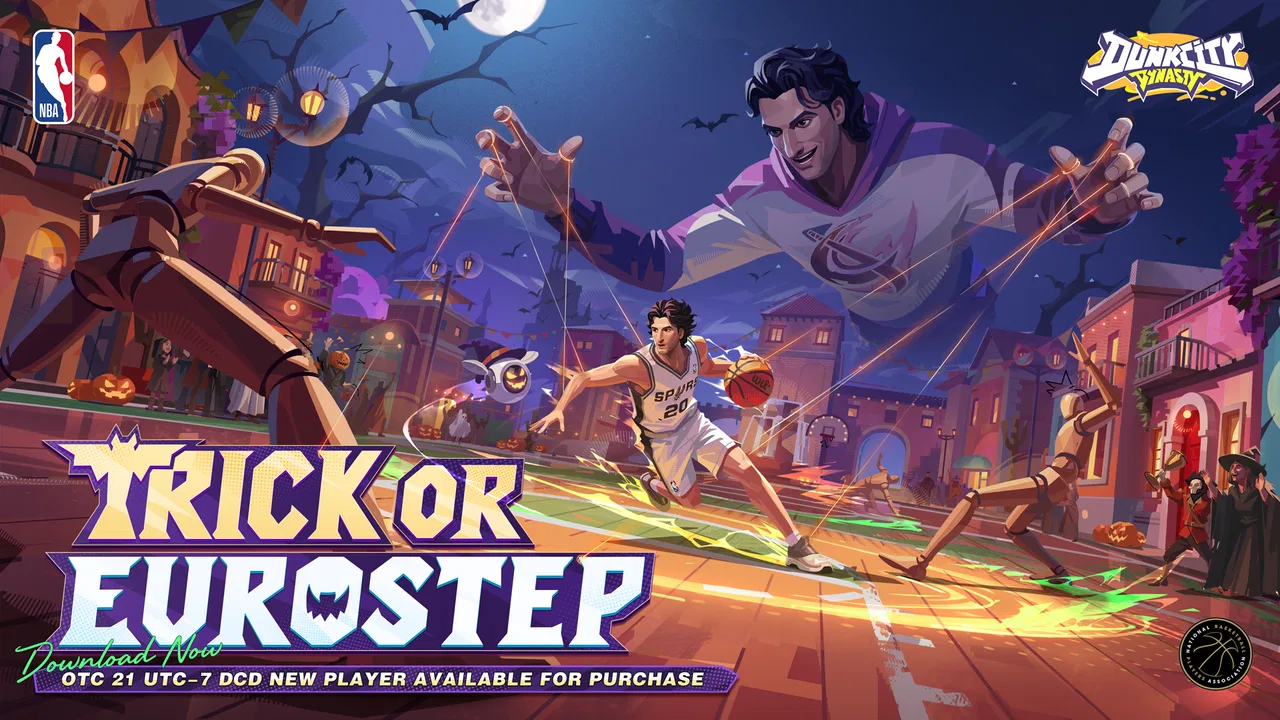
The art direction does a lot of work before the first possession begins. The game presents basketball as a social, high-energy spectacle, with a visual style that favors bold character presence and readable action. That choice helps the court feel like a stage. Players are not just small figures moving around a flat surface; their gestures, movement, and finishing moments are designed to make the match feel expressive.
I like that the visual identity is consistent with the title’s streetball focus. It does not try to disguise itself as a serious television broadcast. Instead, it leans into a more colorful and immediate mood, which makes a successful drive or dunk feel like a moment worth noticing. This also helps mobile play: strong silhouettes and clear movement are more useful on a small screen than a cluttered, overly detailed presentation.
The NBA license adds familiarity, but the game’s personality does not depend only on recognizable names. The courts and character presentation give the experience its own tone. That distinction matters because licensed sports games can sometimes feel like menus wrapped around a brand. Here, the street setting remains central to the mood, and the license works as an extra layer of recognition rather than the entire reason to play.
There is a trade-off in this approach. A stylized basketball world can make the action more inviting, but it may not satisfy players who want every movement to resemble a real professional broadcast. I found the exaggerated presentation useful when I wanted excitement, while a more restrained simulation would be preferable for studying defensive rotations or reproducing the slower pace of organized basketball.
How the setting changes the feel of each possession
The courts are not just decoration. They frame the game as a contest where momentum and personality matter. The setting encourages me to read the match emotionally as well as tactically: a good defensive stop feels like a swing in energy, while a clean finish can change how aggressively I approach the next possession. That sense of rhythm is more important here than memorizing a long list of systems.
One useful adjustment is to treat the environment as a reminder to stay active. Standing still for too long makes the action feel disconnected from the game’s intended mood, and it also gives the defense an easier job. I get better results when I use the visual flow of the court to keep moving, look for passing angles, and avoid turning every attack into a straight line toward the basket.
The setting also makes the game easier to share with a friend who may not normally play basketball titles. Someone can understand the appeal from a short look at the screen because the visual language communicates speed and competition immediately. That accessibility is a genuine strength, although players who prefer quiet, methodical sports games may find the presentation too loud or restless.
Sound, timing, and the emotional rhythm of play
The sound design supports the same quick, confident mood as the visuals. On-court audio helps give movement and contact a sense of weight, while the overall presentation keeps the match feeling active between major scoring moments. I do not experience the game as a silent sequence of button presses; the audio helps connect a pass, a defensive challenge, and a finish into one continuous rhythm.
This matters because mobile sports games can easily feel mechanical when the player is only watching meters, icons, or control prompts. Dunk City Dynasty works better when I use the sound as part of my timing rather than treating it as background decoration. A possession feels more natural when I react to the action on the court instead of staring only at the interface.
I still prefer to lower the volume when playing in public or during a short break, and the game remains understandable without making sound the only source of feedback. That flexibility is useful, but the atmosphere is stronger when audio is available. If you enjoy sports games mainly for calm planning, the energetic presentation may take some adjustment. If you want a match to feel lively from the opening seconds, the sound and pacing are well matched.
The rhythm is also shaped by how quickly the game moves from one decision to the next. There is little room for passive play. A missed opportunity can become a counterattack, and a defensive mistake is often punished before I have time to reset. My most practical tip is to decide what I want from a possession before I receive the ball. Knowing whether I am looking for a drive, a pass, or a reset prevents rushed choices when the defense closes in.
Where the mechanics support the mood
The core mechanics fit the streetball presentation because they reward visible, immediate decisions. Passing, movement, shooting, and defense all make sense in the context of a compact contest. I do not need to pause the action to understand the purpose of a possession. The game’s strongest moments come when the controls let me respond quickly to what is happening rather than forcing me through a long setup.
That does not mean every match feels equally smooth. Mobile controls always require a period of adjustment, especially when several players occupy the same area and the correct action depends on a narrow timing window. I found it helpful to spend early sessions learning movement and defensive positioning instead of chasing highlight plays. Once I became more comfortable, the spectacular moments felt earned rather than random.
A non-obvious strength is how much value comes from restraint. New players often focus on scoring because the game’s presentation makes attacking look exciting. In practice, a disciplined pass or a well-timed defensive retreat can be more important. I recommend watching the space behind the ball handler and thinking one action ahead. If a teammate is already drawing attention, moving into a useful passing lane can create a better chance than demanding the ball immediately.
Another useful trade-off is between individual flair and team efficiency. The game invites personal expression, but a player who always tries to create alone becomes predictable. I get more consistent results when I alternate pressure: attack directly once, move the ball on the next possession, then use the defense’s reaction to choose the third option. This simple pattern keeps the match from becoming a repeated attempt at the same move.
Defense deserves special attention because it is easy to treat it as the less exciting half of the game. That is a mistake. Staying between the opponent and the basket, avoiding unnecessary lunges, and recovering after a missed challenge can determine whether the next attack begins under control. Players who feel that the game is too chaotic should first improve defensive discipline; the match becomes easier to read when the opponent is not constantly receiving free space.
Progression, purchases, and practical expectations
The free-to-play structure means I would approach progression with patience. Optional purchases sit between $0.49 and $99.99 per item, a wide span that makes it important to decide in advance whether I am playing casually or trying to accelerate progress. For a relaxed player, the best approach is to learn the game before spending. If the controls do not feel natural after several sessions, a purchase will not solve that basic issue.
Players may reasonably wonder whether the game is suitable without paying. My answer is that it is worth trying free first, especially because the main appeal is the feel of the matches. Spending makes more sense only for someone who already enjoys the loop and understands what a purchase changes for their own play. I would be cautious about buying simply because a rival seems stronger; competitive frustration is a poor reason to spend.
Compatibility is also straightforward for older Android devices, since the minimum requirement is Android 5.0. That broad support is helpful, although actual comfort can still depend on a phone’s performance, screen size, and connection quality. On a smaller screen, I would pay extra attention to control placement and avoid playing with unnecessary overlays that hide the court. On a less powerful device, shorter sessions can be more comfortable than expecting a long uninterrupted run.
The current version is 1.0.286240, and the game has already attracted more than a million installs. Its average rating sits at 4.8 from roughly forty-eight thousand ratings, with about two thousand two hundred written reviews. Those figures suggest a strong reception, but I would still judge it by the qualities that matter to me: whether the controls feel responsive, whether the pace stays enjoyable, and whether the purchase structure fits my habits.
How it compares with other basketball choices
Compared with a traditional basketball simulation, this game is easier to enter and more interested in spectacle. A simulation is usually the better choice for players who want realistic substitutions, detailed tactics, long-term team administration, or the patient pace of a full match. Dunk City Dynasty is better when I want a compact contest with a strong visual identity and decisions that are understandable within seconds.
Compared with a basic arcade basketball game, it offers a more recognizable professional-basketball flavor through its NBA licensing and player-focused presentation. It still feels quicker and more expressive than a strict simulation, but it is not merely a score-chasing toy. Positioning, passing, and defensive choices matter enough to reward practice.
It also differs from casual one-touch basketball games because it asks me to stay involved during the whole possession. I cannot rely only on a single automatic action and watch the result unfold. That makes it more demanding, but also more rewarding for someone who wants control over the flow of play. If you want a game that can be played almost absent-mindedly, a simpler alternative may be more suitable.
Who should install it, and who should pass
I would recommend it to basketball fans who enjoy streetball atmosphere, players who like short competitive sessions, and newcomers who want a sports game that communicates its purpose quickly. It is also a good fit for someone who values presentation as much as mechanics, because the art, sound, and pacing are designed to create a coherent mood rather than feeling like separate layers.
I would be more cautious with players who dislike free-to-play progression, feel uncomfortable with competitive pressure, or want a completely realistic basketball experience. The game’s energy can become tiring if every session is expected to feel intense. It is also not my first choice for someone whose favorite part of sports games is managing a team away from the court; the attraction here is being inside the action.
For a practical routine, I would start with short sessions devoted to one skill at a time. First learn movement and passing, then focus on defensive recovery, and only afterward chase more ambitious finishes. This approach reduces the temptation to judge the game by early mistakes. It also reveals whether the controls suit your hands and whether the fast rhythm is enjoyable rather than overwhelming.
My atmosphere verdict after playing
Dunk City Dynasty succeeds because its art direction, sound, setting, and pacing all point toward the same playable mood. The game wants basketball to feel immediate, expressive, and social, and its mechanics generally support that goal. I especially appreciate that the streetball identity is not limited to a short description; it appears in the way the courts look, the way matches move, and the way a possession invites quick decisions.
There are compromises. The stylized approach will not replace a serious simulation, the fast pace can expose weaknesses in mobile controls, and the broad purchase range deserves careful handling. Those are real considerations, not minor footnotes. Still, they do not erase the game’s central strength: it makes a basketball match easy to start and satisfying to improve at.
After playing, I see it as a strong free sports option for anyone who wants a lively streetball game rather than a complete professional league simulator. I would install it, play the early matches without spending, and decide based on the feel of movement and defense. If that rhythm clicks for you, the combination of recognizable basketball flavor and energetic presentation gives the game a clear place on a phone.
FAQs for Dunk City Dynasty
01What is Dunk City Dynasty?
Dunk City Dynasty is a thrilling basketball simulation game available on both Android and iOS platforms. It offers players an immersive experience with realistic graphics, dynamic gameplay, and a wide array of customizable options for teams and players. Whether you're a casual gamer or a basketball enthusiast, this app caters to all skill levels.
02Is Dunk City Dynasty free to play?
Dunk City Dynasty is free to download and play. However, it offers in-app purchases that allow players to enhance their gaming experience. These purchases can include items like player upgrades, cosmetic enhancements, and energy boosts. While these are optional, they can offer a competitive edge in the game.
03What are the key features of Dunk City Dynasty?
The game features realistic 3D graphics, intuitive controls, and a variety of game modes including quick matches, tournaments, and multiplayer battles. Players can create and customize their own teams, participate in global leaderboards, and unlock achievements. Regular updates ensure new content and events, keeping the gameplay fresh and engaging.
04Does Dunk City Dynasty require an internet connection?
Dunk City Dynasty does require an internet connection for certain features, especially for multiplayer modes and accessing leaderboards. However, some single-player modes can be enjoyed offline. An internet connection will also ensure you receive the latest updates and events in the game.
05How can I improve my skills in Dunk City Dynasty?
To improve your skills in Dunk City Dynasty, practice regularly in different game modes. Focus on mastering the controls and understanding the strengths and weaknesses of various players and teams. Participating in tournaments and challenges can also help hone your skills. Watching tutorials and engaging with the online community can provide additional tips and strategies.
Pros
- Engaging storyline with dynamic characters.
- Smooth graphics enhance gameplay experience.
- Variety of game modes keeps it exciting.
- Frequent updates with new features.
- User-friendly interface for easy navigation.
Cons
- Requires constant internet connection.
- In-app purchases can be pricey.
- Occasional lag on older devices.
- Limited customization options.
- Advertisements can be intrusive.

Dunk City Dynasty
Gallery